
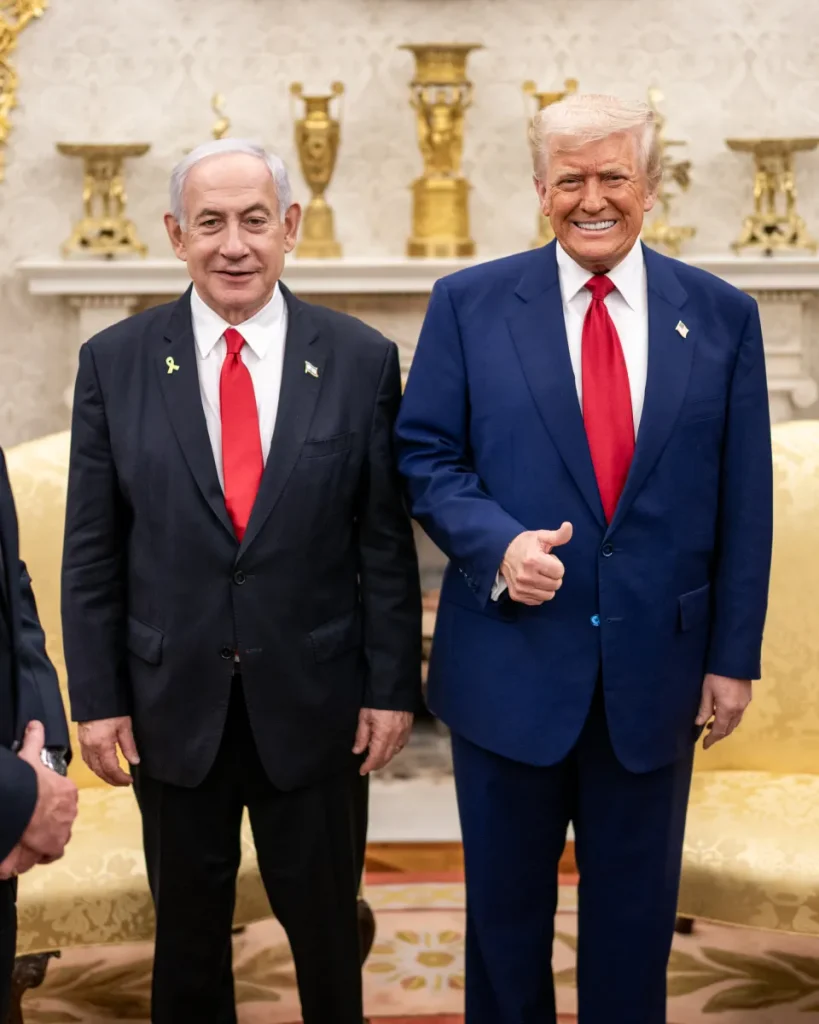
Forming a coalition government in Israel is a difficult and unpredictable process, made much more complex by the radical proportionality of the electoral system. Israeli voters, nonetheless, were faced with a fundamental choice in yesterday’s election.
They could enable Binyamin Netanyahu to retain office with right-wing allies determined on a course of expansionism and rejection of a two-state solution. Or they could elect a Knesset with a majority open to a strategy of peace and implementation of the two-state solution favoured by the great majority of UN member states. The outcome of the voters’ choices is one of profound international consequence.
US media have reported that Netanyahu attempted to persuade the Israeli military to stage some form of pre-election military spectacular against Iran. The motive was clear – it was to escalate Israeli citizens’ apprehension of an external threat. The election ploy was one that seems to have been frustrated by the refusal of the Israel Defense Forces (IDF) to become involved. Their refusal, apparently, was based on the argument that any such Israeli attack would result in a counter-attack against Arab states’ infrastructure, and would further isolate Israel.
Such an attack would also have driven oil and gas prices further upwards with potentially serious consequences for Donald Trump’s efforts to retain control of the United States Congress in next week’s midterm elections. Although Netanyahu was reportedly willing to take such risks for his immediate electoral advantage, it appears that Trump and his White House team still want to persuade the Israeli opposition coalition to keep Netanyahu in office if the Likud-led coalition were to lose its overall majority.
The short-term outlook in the Middle East remains very gloomy. There is every reason to suspect that, should they each retain political control, Trump and Netanyahu will unleash further military attacks on Iran as soon as the current elections are over.
Of course, government formation and retention of office is not decided on election day. Formation of a coalition in Israel is a complex process. Likewise, in the United States, the effectiveness of the Trump presidency depends on resolution of a number of possibilities. If Republicans retain control of both Houses, the outlook is radically different from a scenario in which the Democrats capture both Houses. Quoted political odds heavily favour the Democrats to win the House of Representatives; the odds are tighter in relation to overall control of the Senate.
Losing control of Congress is far from the end of Trump’s Maga movement, as he remains in the White House for the next two years. But Trump’s own capacity to run the US by a flurry of executive orders will be seriously weakened if he loses control of one or both Houses of Congress. Loss of the Senate could have far-reaching effects on foreign policy and on reform of the judiciary.
It would be naive to hope that Trump, having lost control of Congress, would simply change his political strategy to one of bipartisanship. By the same token, if the Democrats do win control of Congress, it is essential that they use such control in a manner focused on maximising the chances of a Democrat winning the 2028 presidential election. The temptation for more radical Democrats to make incessant war on the White House between now and 2028 might just play into the hands of a Republican or Maga revival headed by JD Vance or Marco Rubio.
A lot depends on how Trump personally views his chances in the midterms. He insists publicly that his own and Republicans’ poor poll ratings are fake news. In one sense, that belief may restrain him from some pre-election spectaculars of the kind that Netanyahu was contemplating.
Some observers still believe that Trump will take some far-reaching action against Cuba before the election. Indeed, he told those attending one of his rallies that he might yet deploy US naval forces returning from the Gulf to threaten Cuba’s communist regime. He claimed that an aircraft carrier anchored “100 yards” off the coast of Cuba would produce a hands-up reaction in Havana.
Rubio, the US secretary of state has been making similar noises recently. He has urged ordinary Cuban citizens to be prepared to play their part in regime change. The problem with Cuba from a Maga point of view is that early regime change in Havana would require American boots on the ground and would most likely result in significant armed resistance. Pulling off a pre-election Cuba coup appears overly ambitious.
The Serbian and Brazilian election outcomes demonstrate that voters are neither to be taken for granted nor susceptible to external direction. In France, Marine Le Pen is playing her political hand astutely. She has abandoned outright opposition to the EU, and has instead embraced fundamental reform of the bloc and return of political power to individual member states. That political stance could well see her in the Elysee Palace soon.