
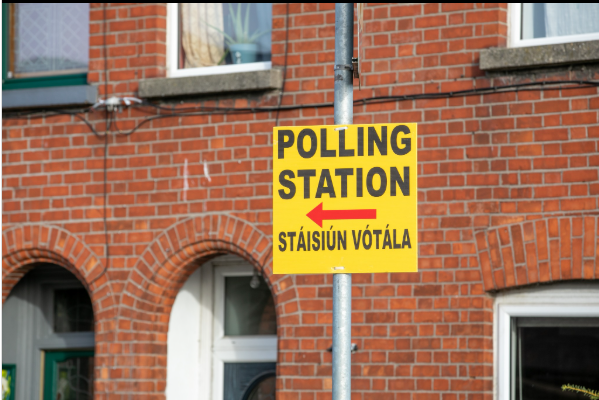
As the dust settles on last week’s two bye-elections, perhaps it is time to reflect on their outcome. Claims by some so-called left-wing parties that the results were affected by the policies of Sinn Féin need some critical analysis.
First, we should remember that the voters were not choosing a government or even mapping out the shape of a new government. The low turnout partly reflects, I believe, a realisation by voters that the outcome of the bye-elections will not make any significant difference to the longevity of the current Government or the policies it adopts. We are three years away from the next general election and a lot could change between now and then.
In a recent conversation with a good friend, I was reminded about how much things have changed since December 1985 when the Progressive Democrats were founded. The 1980s were a period of mass emigration, mass unemployment, high taxation and an almost eastern-European-style State dominance in the economy.
It is hard now to appreciate the suffocating hopelessness that afflicted Irish society at almost every level. Fifteen years into our membership of what was then the European Economic Community, in 1988 the Economist magazine featured Ireland on its front cover under the title “Poorest of the Rich”.
The State in the 1980s owned two shipping lines, nearly all air, sea and road transportation, two banks, insurance companies, all broadcasting, all energy distribution, a steel works, fertiliser factories, all postal deliveries and, it was reported, was even considering acquisition of the struggling Bewley’s cafes chain. On top of this, the country was enduring the cancer, north and south, of political violence and terrorism controlled by the two elements of the Provisional movement – the IRA and Sinn Féin – and by their loyalist counterparts.
It is difficult now to convey to the younger generation how awful and how recent was Ireland’s economic and social failure. They are led to believe that the biggest problem was the Catholic Church.
By the same token current political failures loom large in the public imagination. These centre on a radical failure to provide social and physical infrastructure capable of dealing with the needs of a rapidly expanding population, especially the need for housing in a period of substantial inward migration.
One feature of our present failure is the atrophy of the executive arm of the State as a means of implementing democratically decided government policy. Nearly every government department has spent a quarter of a century establishing a network of semi-independent satellite agencies to which the executive arm of the State has delegated both performance and accountability.
The recent report of the advisory group on accelerated infrastructural development chaired by Sean O’Driscoll has proposed among its many worthy and urgent decision-steps the concept of personal political accountability for Ministers and secretaries general for infrastructural development projects.
If, which is devoutly to be hoped, such accountability can really be achieved then there is real hope that the sclerotic executive arm of the State will no longer impede and delay our ambitious public capital programme for infrastructural development.
To take one example: in the early 2000s the State managed to construct a substantial network of motorways. We should not forget arguments made against the use of public-private partnerships (PPPs), which drove that programme. Officials in the Department of Finance argued the rate of return to the private partners in PPP projects was excessive.
But the alternative was to attempt construction of the motorway network through existing agencies. Critics did not grasp that the choice lay between PPPs and no motorways at all withinany acceptable time frame or economic cost.
The lesson is demonstrated by two projects relating to our justice infrastructure. The Courts of Criminal Justice complex in Parkgate Street, Dublin, was built on time and within budget by a PPP process. The long-projected Family Courts complex at Hammond Lane near the Four Courts has resulted in a derelict site for the last 30 years. The difference is a matter of executive incapacity.
While the bye-elections were not concerned with change of government, we might reflect on the ideologies of the different components of the so-called left alliance mooted in recent weeks.
What kind of government would such an alliance throw up if there were a general election in one, two or three years’ time? Do the would-be constituent parts really believe in most of the policies that have transformed Ireland from being an international paradigm of failure to that of comparative success?
Would a Sinn Féin-led coalition of the left maintain Ireland’s economic and social momentum? Or would we regress towards a culture of abject political failure?
The post bye-election squabble among the elements of a left alternative does not inspire confidence.
The real problem, however, is that Fianna Fáil and Fine Gael seem to have lost political vision, momentum and poll support. They were enabled to continue governing by a small group of independents who also lackvision and political longevity. Something else is needed, as it was in 1985.
Photo credit: Electoral Commission