
A strange aspect of British politics these days is the reaction of the Tory controlled media to the emergence of Nigel Farage and his Reform party. Since he is peddling hard right and populist positions and stances, the Tory right finds it difficult to withhold sneaking regarder respect for his dominant opinion poll position. Tory media find themselves torn between old loyalties to the Conservatives struggling under Kemi Badenoch and a desire to topple Sir Keir Starmer as Prime minister.
There seems, for the present, to be growing acceptance that Kemi Badenoch lacks the political base and public perception to become the next UK Prime Minister.
The startling thing about the Tory party in recent years has been its rapid turnover in leadership. Going back to David Cameron, Theresa May, Boris Johnson, Liz Truss and Rishi Sunak, it gets quite difficult to keep track of the gyrations of the Tory leadership merry-go-round. Britain, which used to scoff at the frequency of changes of government in Italy, seems to have become wholly unstable and confused as to whom it wants to lead and in what direction.
Let us not forget similar gyrations in the Labour party leadership and in particular the absurdity of centrist Labour MPs enabling Jeremy Corbyn and his far-left supporters to seize control of that party. That it is ever wise to nominate a person for office in the hope or expectation that they will lose an electoral contest is particularly fresh in my mind.
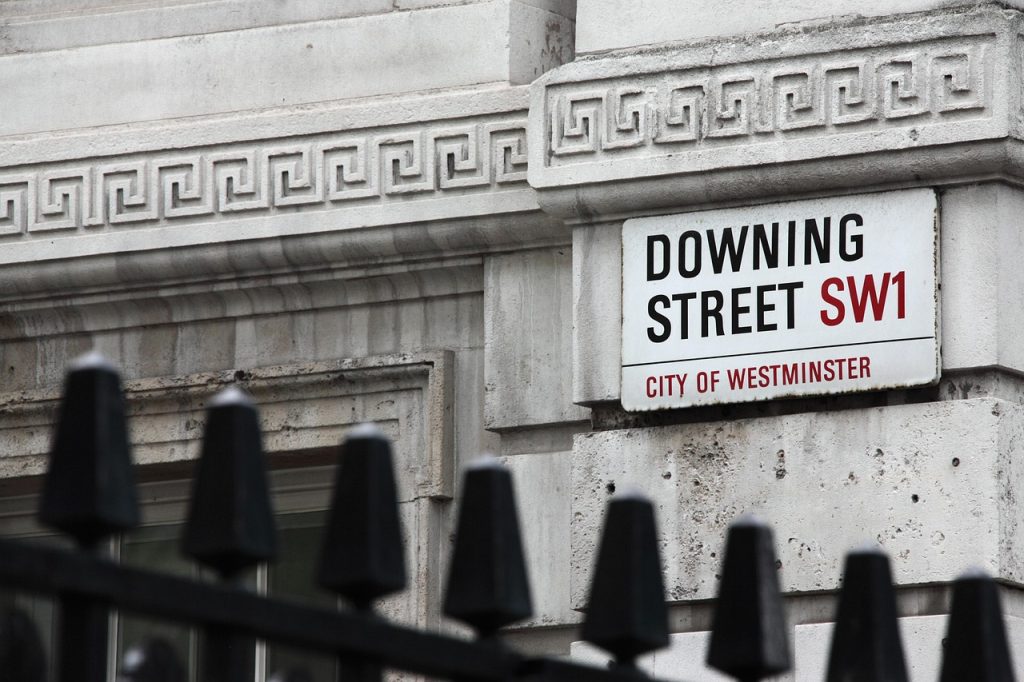
But Keir Starmer has led Labour to the promised land with a House of Commons party membership of more than 400 MPs. This massive majority is, however, very far from happy with the collapse in Labour’s opinion poll support which they have experienced since Starmer took office in Number 10 Downing Street. A huge majority can be a dangerous and destabilising basis for government, as Jack Lynch found out between 1977 and 1979.
The irony is that the Tory party sank without trace the Lib Dems referendum proposal to allow for the alternative vote. Those who believe in centrist politics should, in principle, favour an electoral system which avoids giving seats to the hard left or hard right on the basis of electoral support between 30% and 35%.
Labour’s stunning majority under Starmer had everything to do with a collapse in Tory support rather than a massive swing to Labour.
The entry onto the UK’s “first past the post” battlefield of Reform, waving populist banners and beating hard right drums, has the potential to change everything.
UK voters from Fermanagh to Kent fully understand how to engage in tactical voting in the “first past the post” system.
If Kemi Badenoch is languishing at around 20% support, traditional Tory voters will desert the party in favour of casting a Reform vote to topple Keir Starmer’s Labour, their traditional foes.
Add in the Scottish nationalists, Plaid Cymru and Northern Ireland MPs and the stage is set for frightening political fragmentation that would make Italian post-war politics seem boring and stodgy.
Barring some dramatic international political upheaval or major political scandal of Epsteinian proportions, there is every possibility that Nigel Farage will cross the threshold of Number 10 in three years’ time. How would Scottish Labour and Scottish Tories fare in such circumstances? Has the Union Jack waving Reform party any real chance of dominating in Scottish polling stations? Will the Scottish Nationalists recover to hold the balance of power?
Could a collapse of Donald Trump’s MAGA movement seriously damage the appeal of Reform? Farage has been carefully positioning himself to benefit from MAGA sentiment and support in the coming years. If Trump were to lose the House of Representatives in November’s mid term US elections, would that derail the MAGA bandwagon internationally? Or could JD Vance still deliver a new US administration intent on the destruction of the European Union?
A lot depends on forthcoming electoral contests in France and Italy.
If Trump’s stated security strategy entails supporting what he terms Europe’s “patriotic” parties and politicians, the political landscape in Europe could yet be destabilised. Will the French elect Jordan Bardella as their next president?
Nothing is inevitable as Portuguese voters demonstrated last weekend when crushing a hard right Trumpophile challenge. Maybe European voters will see through Trump’s destructive anti-EU strategy. Ireland has a lot of skin in the game of international politics over the coming three years.
What would Farage would say or do in relation to Northern Ireland? Who knows whether a Sinn Fein dominated coalition with Social Democrats, Labour, Greens and People Before Profit will be knocking on the gates of Merrion Street when the stars are next aligning for Europe.
While the probable shape of an end to the Ukraine war is emerging, the consequences of a peace brokered by Trump and Putin for mindsets of European voters remain very difficult to predict.
When we need a telescope we only have a kaleidoscope.